History
Our History
Early Beginnings
When a group of Westbourne residents first came together in the summer of 2018, they were determined to take action to provide homes for local people who could not afford to buy or rent a home on the open market. Forming a Community Land Trust as a way to achieve this, already had the support of both Chichester District Council and Westbourne Parish Council. It was considered to be the best way for local people to tackle the affordable housing problem that affects many communities, forcing young people to leave their home place in search of cheaper accommodation elsewhere or sometimes to sofa surf with friends or relatives when they really need a home of their own.
In November of 2018, Westbourne Community Trust was established as a legal entity and began to discuss with the community and a range of partners how a project could be taken forward. It was soon established that there was considerable support for this. Potential funding sources for a development of affordable housing were identified and a search for a suitable site commenced.
Identifying A Site
One of the most important parts of setting up a community land trust is the process of identifying a site on which we can build our community owned and affordable houses. Luckily for us, a comprehensive and systematic analysis of land for housing in Westbourne had already been undertaken by the Parish Council as part of the work for the Neighbourhood Plan. So, with the support of the Parish Council we were able to look again at this work and reviewed all the sites that were identified with potential for housing at that time.
The lack of suitable sites in Westbourne meant that there were few suitable options. However one of those options was land owned by Chichester District Council at Mill Road. The land was enjoyed by many local residents as a much-loved community park and the Trust had no intention of changing that. The park equipment was in poor condition. We wanted to bring it into community ownership, build 10-12 houses that would be owned by the community for local people, retain as much open space as possible, and replace and improve the existing play equipment and facilities. We consulted on these ideas with the local community and fund they were strongly supported.

Consultation
Once the land at Mill Road had been agreed as the best location for our development, Chichester architects MHA were appointed to prepare design options for further consultation with the local community and other local stakeholders.
Through this process the shape of the design was firmed up and additional community benefits were identified that could be included such as the type of play facilities in the park and the provision of storage facilities that were needed by the Parish Council and the Allotment Association. We were also able to identify alternative construction vehicle access avoiding congestion problems in Mill Road and additional off-street parking for Mill Road residents.
This process of consultation shaped the scheme and made it much more than just an affordable housing project by including benefits that would make a difference to the local community.
The Build
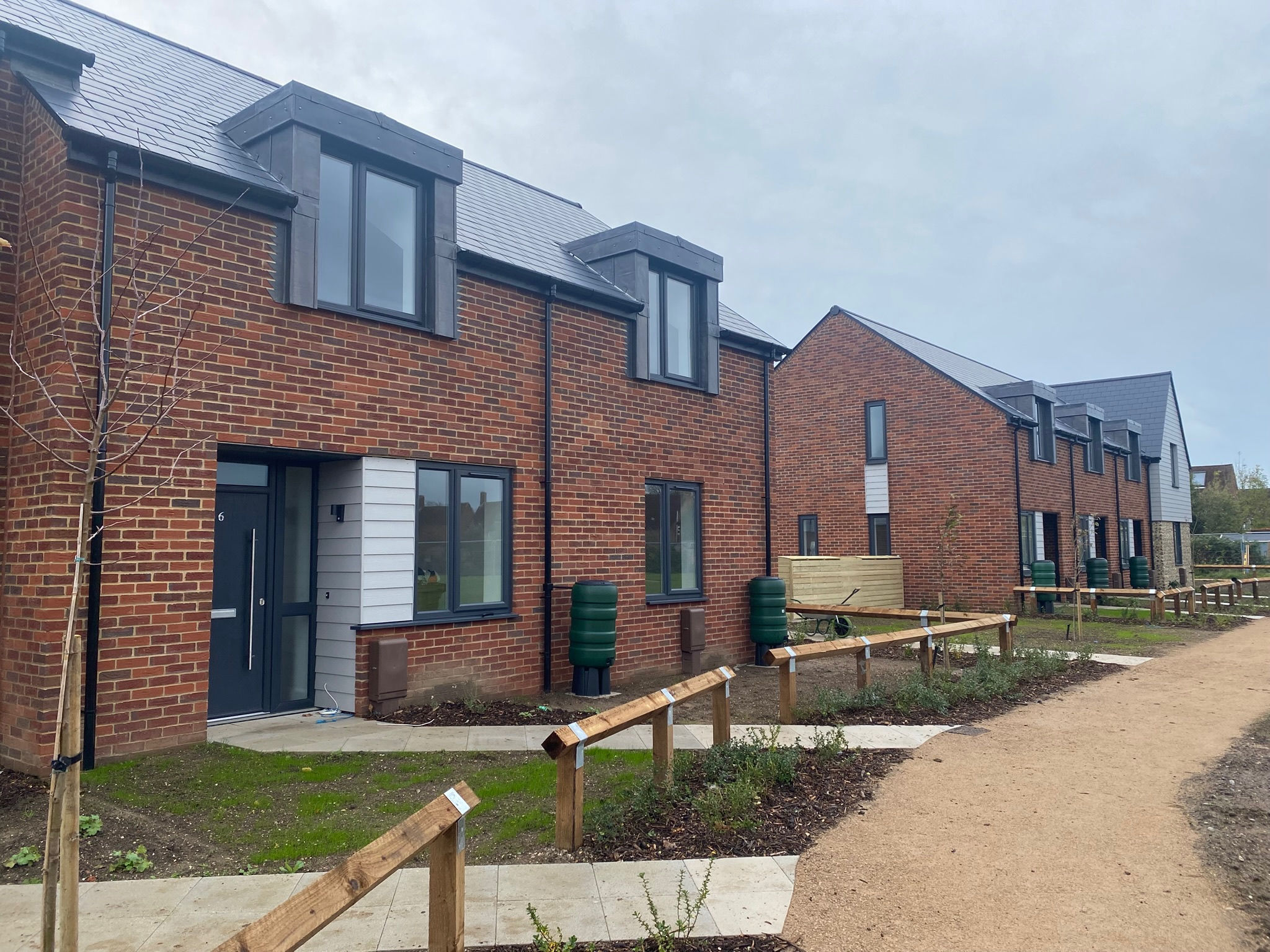
Once the design had been finalised an application for planning permission was submitted and on 2nd February 2023 planning permission was finally obtained. By that time a local construction contractor had been appointed following a thorough process of competitive tendering. Ascia Construction Ltd proved to be an ideal choice as not only do they operate locally but they also have a growing reputation in delivering good building projects for housing and other public sector projects.
It was not an easy process getting to start the work on site. The problems of hyperinflation and the Covid pandemic interrupted the programme and required a major rethink to adjust the scheme to deal with the increasing costs of the work. But we made it and contracts were finally signed and we started the building work on site in September 2025.
The work was completed in November 2026 on time and to budget.


Funding
The scheme was funded by a range of public organisations that provide grants for affordable housing projects including
Homes England
Chichester District Council
South Downs National Park Authority
The Westbourne Parish Council also generously provided a significant funding contribution to support the upgrade to the park facilities and the provision of the storage unit.
In addition to the grant funding that was secured, Westbourne Community Trust needed to secure a loan that could be funded from the rental income from the new houses. We were very fortunate to secure this loan finance from a local charity, St Mary’s Hospital Almshouses Trust in Chichester, at an affordable rate of interest.
Benefits
Westbourne Parish Council is a key partner for this project and its Chair, Nigel Ricketts said:
“Westbourne has an urgent need for more affordable housing, particularly for one and two bedroom properties as shown by a recent housing needs survey. There are many other benefits as the Trust has made significant investments in new recreation and playground facilities for local children and their families as well as improving parking in Mill Road for existing residents”
This has always been more than just a much needed social rent affordable housing project and the inclusion of additional community benefits has ensured that the project has been welcomed in the local community. The community benefits can be summarised as below.
- The local park in which the site is located has been improved with landscaping and new play equipment to replace the existing outdated equipment.
- A new storage building has been provided for the adjoining Allotment Association and the Parish Council.
- New residents’ parking space has been provided in Mill Road to ease congestion and deal with a lack of off-street parking.
- All construction traffic entered and left the site on a temporary access road that was generously agreed by an adjoining landowner, which avoided construction traffic being routed through the village.
- A rewilding and tree planting scheme has been undertaken on a farm within the village to offset the nitrate emissions that the development will generate.
- A range of nature conservation measures are incorporated into the design of the houses and the relandscaping of the park to encourage biodiversity.